
For the first time in 26 years, the United States has lost its measles elimination status after more than a year of ongoing spread and more than 5,400 confirmed cases nationwide, including in Texas.
The change means measles is no longer limited to isolated cases linked to international travel, said Dr. Grace Hidalgo, a pediatrician with MD Kids Pediatrics. But it does not mean the virus is spreading everywhere, she cautioned.
“We’re no longer having isolated cases that come from international travel,” Hidalgo said. “Now we’re having sustained transmission in our nation, but it is important to understand that that does not mean that is widespread in every state or in every community.”
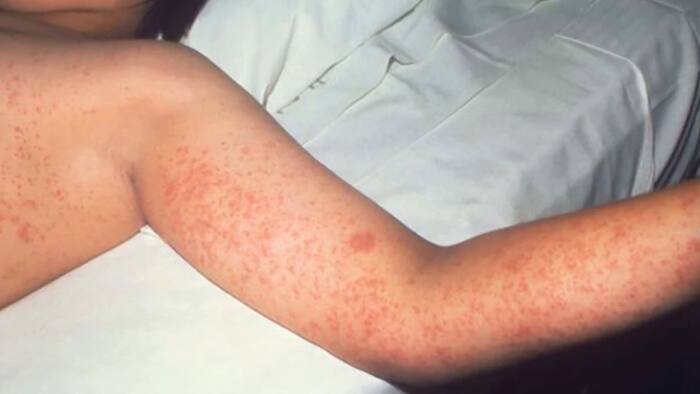
Measles can begin with a high fever, runny nose, cough and red, watery eyes before a rash appears. The rash often starts at the face or hairline and spreads down the body, Hidalgo said. Small white spots inside the mouth may appear before the rash.
Symptoms can begin seven to 14 days after exposure. A person with measles can spread the virus for four days before and four days after the rash develops. The virus can remain in the air for about two hours after an infected person leaves, Hidalgo said.
“One person with measles can infect up to 18 people,” she said.
If a child has symptoms that could be measles or may have been exposed, parents should call their pediatrician before going to a clinic or emergency room, Hidalgo said. Medical offices can follow protocols to limit the risk of exposing other patients, including children and other vulnerable people.
The MMR vaccine, which protects against measles, mumps and rubella, is the “easiest, safest and most effective way to protect your children from measles,” Hidalgo said. The routine two-dose series begins at 12 to 15 months, when the first dose provides about 93% protection. A second dose, given at ages 4 to 6, raises protection to up to 97%, she said.
Some infants ages 6 to 11 months may be advised to get an additional dose, including those traveling internationally or living in a community experiencing an outbreak. That dose does not count toward the routine two-dose series, Hidalgo said, and is not recommended for every infant. Parents should ask their pediatrician for guidance based on their child’s circumstances.
Hidalgo encouraged families to turn to their pediatrician with questions or concerns about a possible exposure.
“Parents need to be aware. They should trust their pediatrician as their trusted source of information,” she said.


